There’s no such thing as a 9-to-5 in bison ranching. It’s a lifestyle, and it’s unique to every rancher we partner with at North American Bison.
While hardy, bison are also wild animals, creating distinct advantages and challenges compared to traditional cattle ranching.
How Seasonality Influences Bison Behaviors and Ranching Practices
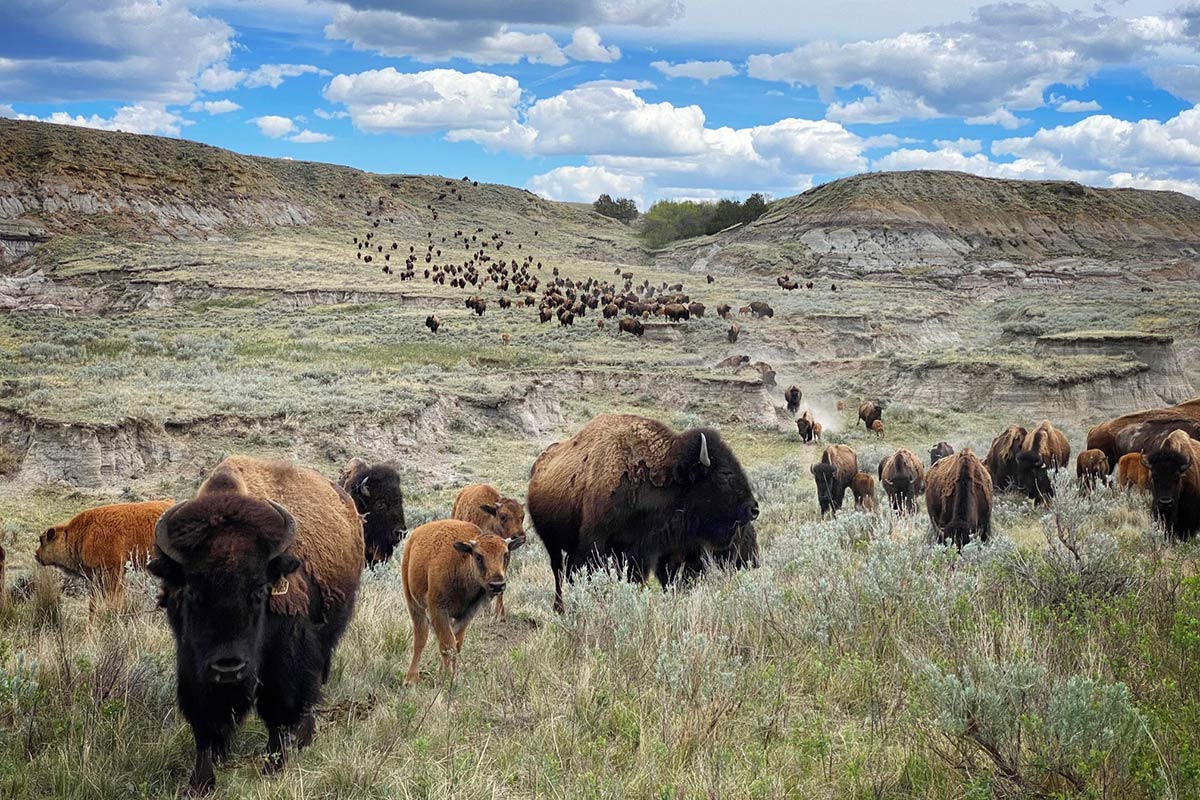
Even in ranch settings, bison remain undomesticated animals. They live on their natural schedules, and ranching requires adaptability, preparedness, and a more “hands-off” approach to reduce stress on the herds.
Winter: Survival, Stewardship, and Stillness
Less grass is available to graze during the winter months, and wild bison herds often migrate toward areas of lower elevation where vegetation is more accessible. Many ranchers, however, provide rotational grazing and supplemental feeds to keep herds healthy without sacrificing their natural behaviors.
With dense winter coats, bison are naturally insulated against low temperatures and winter winds, so herds are left to wander with no need for manmade shelters. Still, ranchers remain watchful over the herds, helping ensure their health and wellness throughout the coldest season.
Spring: Calving, Grass, and Vigilance
Calving season generally begins during late spring. Bison cows will calve on their own—it’s often safer and less stressful on the animals when ranchers don’t interact with the bison during this time.
Instead, ranchers may monitor the herds from afar, intervening as little as necessary. Bison grazing activity also increases substantially as the weather warms, making nutritious grass a crucial resource to have available.
Summer: Growth, Development, and Grazing
During the summer season, young calves grow rapidly, gaining one to three pounds a day during their first year of life. While calves rely heavily on their mother’s milk for at least their first six months, adult bison continue feeding on nutrient-rich grasses to build up fat reserves for the coming winter, consuming nearly 30 pounds of food daily.
In contrast, bison may eat as little as five to ten pounds every day during the winter when food is scarce.
For ranchers, it’s crucial that bison have plenty of room to roam and abundant, high-quality forage during this time to keep up with their appetites.
Fall: Weaning, Instinct, and Preparation
Many bison calves begin weaning off their mother’s’ milk during the fall. Mating season, which typically occurs from June through September, also concludes. The herds begin regrowing their winter coats as temperatures drop, and ranchers often focus on gearing up for the scarcer season to ensure the herds will have enough sustenance.
Living on Nature’s Timeline
Above all else, the independent ranchers we partner with share one core quality: respect. Humane, ethical treatment and care remain paramount on every range, giving bison freedom to roam, forage, and live as the honorable creatures they are.
Interested in learning more about bison ranching? Visit our blog.